
New London Multi-Day Arrest Logs
No county office keeps one chronological New London County arrest log. Each city and town runs its own records channel. New London Police offers an arrest log for public inspection plus a PIO distribution route. Norwich Records maintains its logs and related documents. Town of Groton and City of Groton keep separate channels too. State police and tribal agencies may also hold records.
The clearest multi-day example is a historical Patch log from February 2012. The Day publishes dated Police Logs pages. CT Insider posts selected police-sourced arrest stories. These outlets show a blotter pattern rather than complete coverage. Nothing guarantees continuous order or current custody. Search by date and by agency. Then verify the report with the office that wrote it.
Read New London Blotter Entries
Treat a multi-day item as an index, not the record itself. Write down the arrest date. The outlet's publication date may differ. Name the police source behind the entry. A bare county label is too broad where New London, Norwich, two Groton departments, state police, tribal police, and resident troopers all make arrests.
- Choose the date range and municipality tied to the event.
- Search dated news logs and the responsible police department's official news or records page.
- Record the name, arrest date, agency, charges, bond, and incident number only when shown.
- Ask that agency for the current report when the news account is incomplete or old.
- Use the Connecticut Judicial Branch docket for later case status and disposition.
For a fresh event, try Arrests Last 24 Hours. It covers a tighter window. A multi-day blotter answers a different question: what was reported across a span of dates, and what route remains once the item scrolls away.
New London Arrest Log Fields
Formats differ between agencies and news outlets. The historical Patch example lists several common fields, though no modern format is mandatory.
| Entry field | Meaning and limit |
|---|---|
| Name and age | Identity details reported by the source; confirm similar names with police. |
| Address | A reported location detail, not proof of present residence. |
| Arrest date | The event date, which may precede publication by days. |
| Police agency | The source and correct custodian for the full report. |
| Charge | An charge at that stage, subject to later amendment or dismissal. |
| Bond | A reported value that can change through court action. |
| Photograph | Not guaranteed. A story image may be evidence or a police-supplied image rather than a booking photo. |
An incident number points to the police file. A docket number belongs in court. A DOC inmate number sits with the state custody system, so never treat these identifiers as interchangeable.
Weekend New London Blotter Timing
No department promises a weekend or holiday release schedule. A Monday article may bundle events from prior days. A dated news log may appear only after police processing finishes. That grouping reflects editorial choice, not an arrest surge. Staffing, report completion, supervisor review, and newsroom selection can all shape what appears in print.
Search adjacent dates when an item is missing. Ask the department whether a log can be inspected, whether a report is pending, and what dates it covers. Keep the date of your request. A gap in a news archive may reflect access limits or selection, not empty streets.
The Day Police Logs
The strongest dated example is The Day's Police Logs page for May 26, 2025.
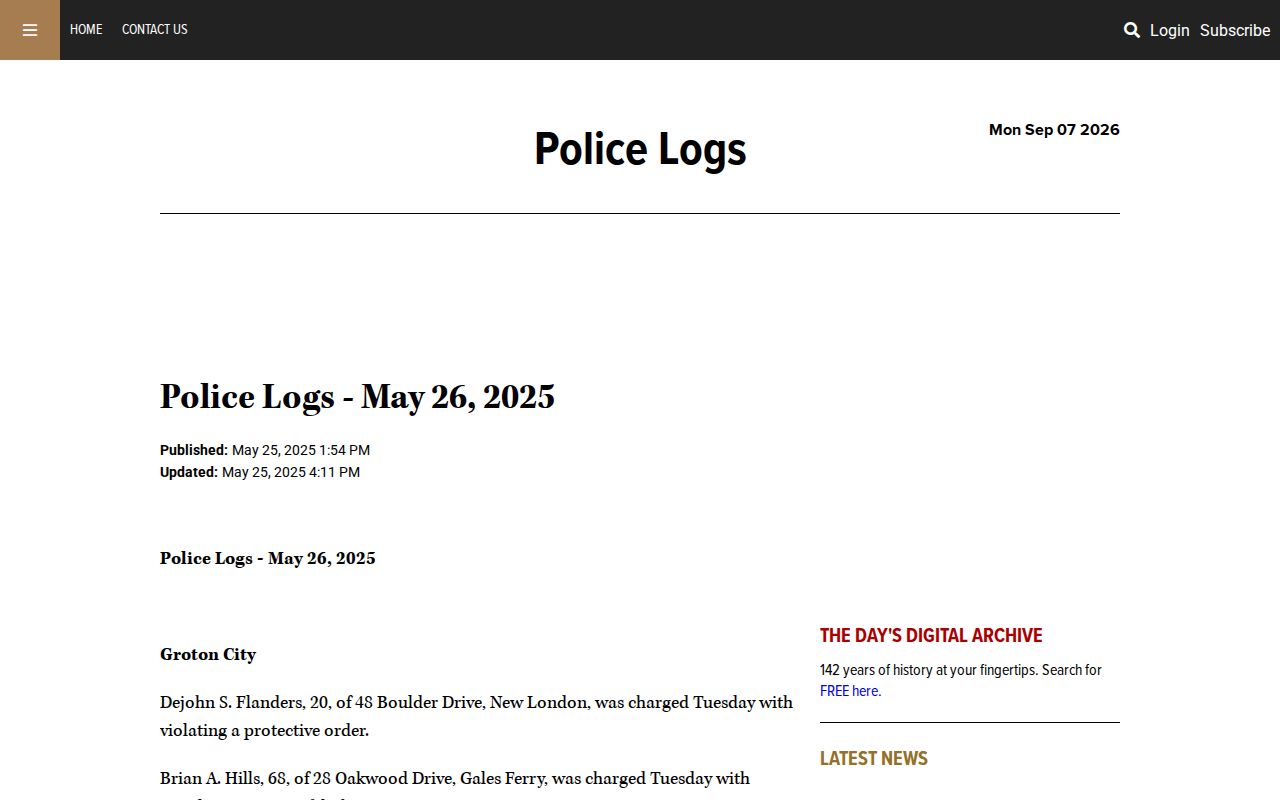
The page shows date-based news presentation, not a live custody roster. Read the article for its named police source. Then verify the record with that department.
The Day covers New London and surrounding southeastern Connecticut communities. Its archive can surface an item that left the front page. The paper makes no promise of permanent free access or complete county coverage. A newsroom archive and a police retention system simply serve different purposes.
Historical New London Arrest Blotters
Patch's historical New London Arrest Log preserves a 2012 example covering several prior dates.
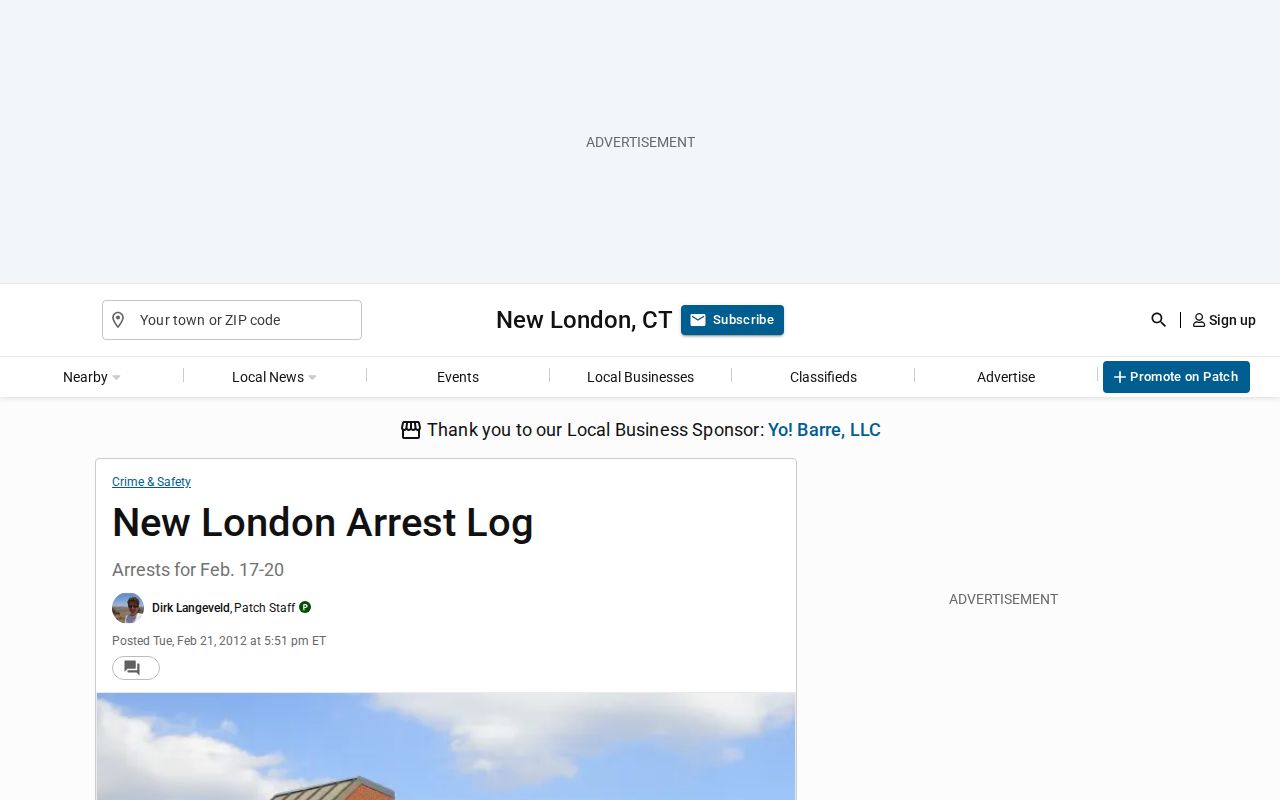
The archive lists names, ages, addresses, dates, charges, and bond. It is not a current official feed.
Old entries can pin down an agency and a date. But they cannot prove a record is still public. Work from the article to the police file, then to the court docket. An old image needs the same verification.
Selective New London Arrest Coverage
CT Insider's New London-area report illustrates selective reporting attributed to a named police department.
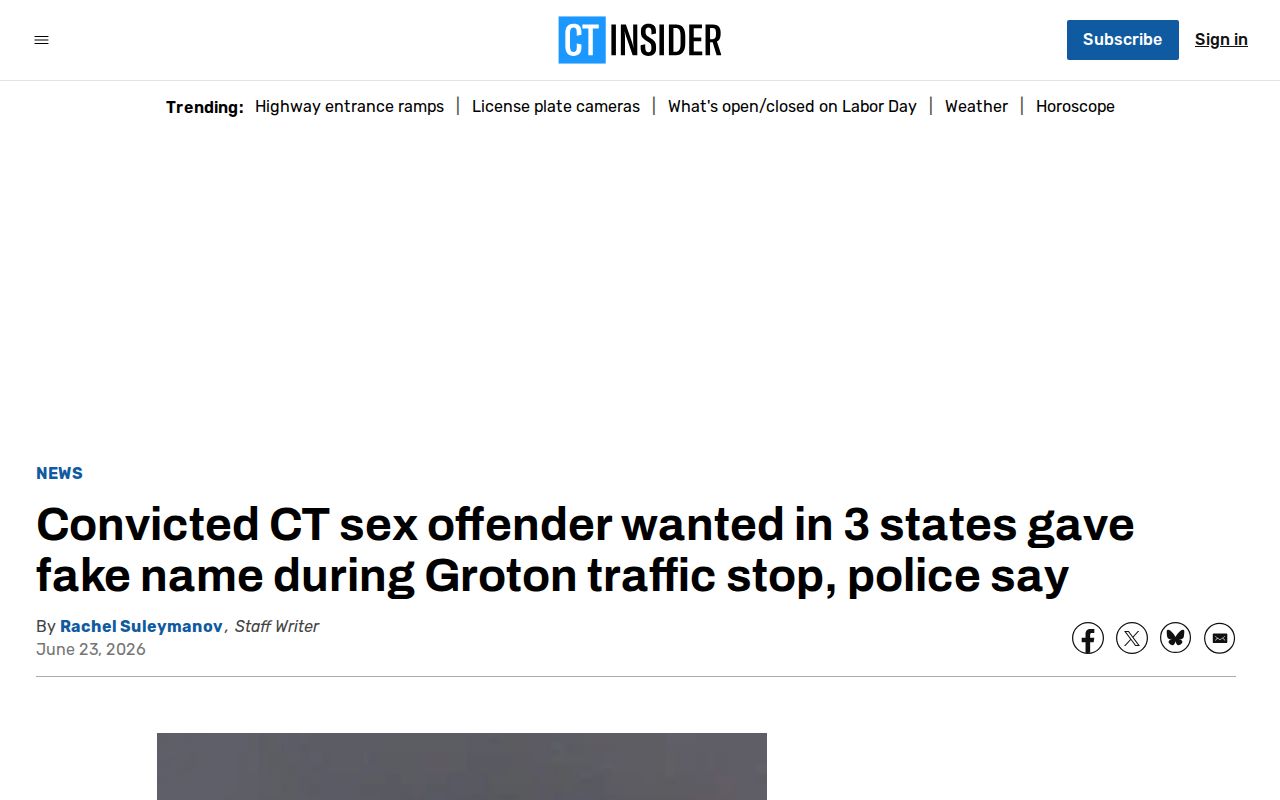
Selective coverage follows a newsworthy incident rather than a full list. Any police-provided image may not be a booking photograph. The Norwich Bulletin is another local outlet. It offers no stable public arrest-log section. Search it by date and article title, but treat it as news, not an official feed. Across outlets, keep the article date, name the agency source, and look for updates from police or court.
Unofficial New London Arrest Lists
RecentlyBooked keeps a county-labeled page and claims a rolling multi-day view. It is an unofficial lead, not a custody authority. Its description wrongly calls Corrigan a county detention facility run by municipal police. Corrigan actually belongs to CT DOC. Connecticut has no current county jail system. Put official agency, court, and DOC sources ahead of any aggregator site.
Mugshots.com shows a transient New London County path. Its own materials warn the data may not be timely or accurate. BustedNewspaper, Arrests.org, and Mugshots.zone show no local section. Never substitute a similar domain or an unrelated county page. No commercial photo list supplies a court outcome.
Archive New London Arrest Records
A New London police log stays online for no fixed number of days. Each entry rolls off on its own clock. When one disappears, ask the creating department for the record series, the retention schedule, and the disposition authority. The Connecticut State Library schedules sort public records by administrative, legal, fiscal, and historical value. That framework governs keeping files, not posting them online.
Sometimes an agency says material has transferred. Contact the Connecticut State Archives then and follow its access process. No county booking-photo collection is cataloged there. Court records answer to Judicial Branch rules, and DOC history to state procedures. Retention and publication are separate, so a report can outlive the web log that dropped it.
Ask for the series name and date range. Request the arresting agency and incident number too. Learn whether a booking photo sits with the case or elsewhere. Keep every reply. If a record is sealed or erased, give the agency official documentation and follow its correction process.
New London Charges Need Court Review
Charges often change as a case moves. They can be amended, nolled, dismissed, resolved by plea, or tried. Search the Judicial Branch criminal docket. Significant details deserve confirmation with the clerk, since the online view is not the official file. GA10 New London and GA21 Norwich take different paths. Serious matters go through the Judicial District Part A office.
CT DOC answers custody questions for people under state authority. It is no historical municipal blotter. A released person may drop off the locator while a police report, docket, or news story stays public.
Official New London Blotter Contacts
Verify a news item with its creating agency. Reach out to New London Police, Norwich Police Records, or Town of Groton Records Services, since each holds different municipal records. None of them feed a shared county roster.
Public Record Search
Sponsored Results